EPA Bilingual Labeling: First Deadline and What’s Next on the Horizon?
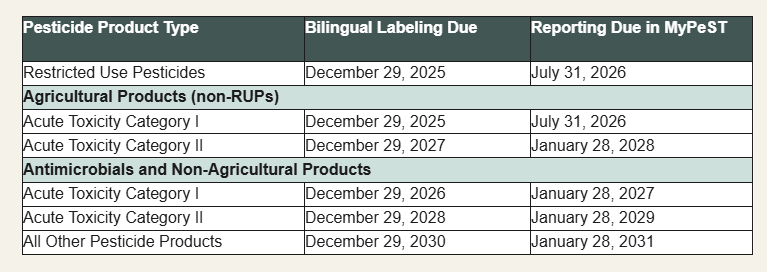
Starting July 31, 2026, registrants of high-hazard pesticides must add Spanish translations of key safety sections and report compliance, kicking off a phased rollout through 2031.
The initial reporting milestone for EPA’s bilingual labeling requirements is officially here. Under the Pesticide Registration Improvement Act of 2022 (PRIA 5), pesticide registrants must update end-use product labels to include Spanish translations.
While high-hazard products such as Restricted Use Pesticides (RUPs) and Toxicity Category I agricultural products, face the immediate July 31, 2026 reporting deadline, PRIA 5 is a multi-year rollout.
What’s Next on the Horizon? Key Deadlines & Schedule
EPA has established a phased schedule based on product type and acute toxicity category, prioritizing the highest-hazard products first:
What Parts of the Label Must Be Translated?
Not every word on the label requires translation. PRIA 5 targets specific, critical safety sections of end-use pesticide labels. Guidance on compliance requirements and implementation can be found on EPA’s Bilingual Labeling website.
To ensure consistency across the industry, EPA also released a Spanish Translation Guide for Pesticide Labeling, which provides standard translations for common precautionary statements.
Compliance Options & Implementation:
Determining how these new requirements impact your products and choosing the best implementation strategy can be complex. Depending on product type, there may be multiple options for compliance, such as:
- Direct on-label translation
- Safety Data Sheet (SDS) citation
- Use of QR codes linking to official translations
Luckily, these changes can be made by non-notification, allowing registrants to bypass the lengthy EPA review process. However, registrants must report compliance status by checking the appropriate product box in EPA’s MyPeST portal.
What has been released at the state level?
California for instance has taken the lead on bilingual labeling:
- Expanded Language Flexibility: Under California DPR Notice 2025-08, registrants may add translations in any language commonly spoken by California’s agricultural workforce through a non-notification label amendment, rather than being limited to Spanish.
- Complete Label Translation: California also allows the entire pesticide label to be translated through a non-notification amendment. Under PRIA 5 guidance, non-notification label changes are limited to translating only the Spanish health and safety statements specifically identified by the EPA.
Preparing for the Next Wave: How Compass Can Help
If you have questions about compliance options or where you product falls in the rollout, please reach out to Compass directly (email me at nicole@compassregulatory.com or fill out the form below!) - where our experts can help you navigate this process. Compass looks forward to supporting clients as they navigate these reporting requirements.
Let's talk about what you're building.
Tell us about your product, your stage, and where you'd like help. We'll get back within one business day.